Youth voices at the GEO Open House Webinar #2
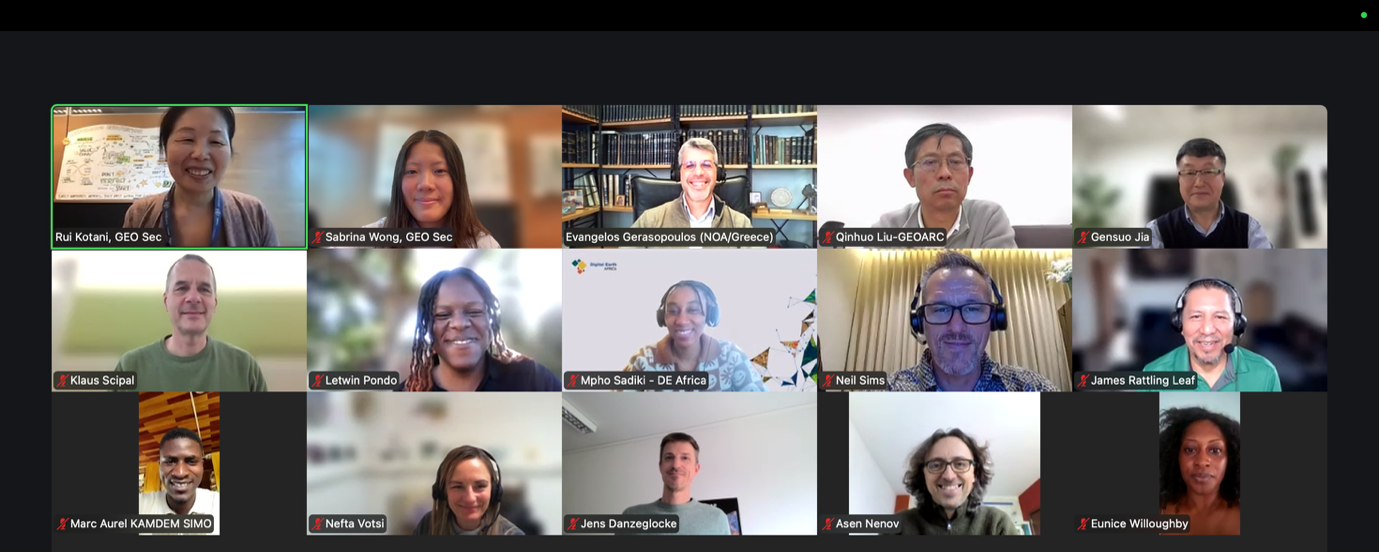
The second GEO Open House webinar convened a range of activities across the GEO Work Programme focused on the nexus of disaster risk reduction (DRR), climate and biodiversity. We attended as representatives of the GEO Youth Community of Practice, with Sabrina also supporting the session technically and Letwin contributing through the DRR & Adaptation Working Group, which co-organised the event.
Youth engagement in the GEO Work Programme
We posed a question to each of the presenters, centred on how young people can get involved in and contribute to the GEO Work Programme.
Representing GEO Land Degradation Neutrality (GEO-LDN), Neil Sims pointed to capacity building efforts, including training programmes and dialogue forums that connect technical and policy communities, as deliberate spaces for youth engagement.
Speaking about Forest Biomass Reference System from Tree-by-Tree Inventory Data (GEO-TREES), Klaus Scipal talked about collaboration through field-based work, where early career researchers can engage in data collection and scientific partnerships.
As part of Global Ecosystem and Environment Observation Analysis Research Cooperation (GEOARC), Liu Qinhuo highlighted data platforms and research collaboration, particularly for youth working with ecosystem datasets.
From Digital Earth Africa, Mpho Sadiki, speaking as both a presenter and a young professional, described hands-on engagement through open tools, sandboxes, and use cases built directly with users.
From the GEO Indigenous Alliance, James Rattling Leaf emphasised co-design and governance, where youth form part of knowledge systems and decision-making grounded in relationships and lived experience.
A fuller view
Taken together, these responses painted a picture of how varied youth involvement in Earth observation can be. The ways to contribute can vary greatly depending on background, interests and discipline.
The entry points are varied. Some come in through science, building field experience as researchers. Others through technology, getting hands-on with open tools and datasets. Through policy, bridging technical work and decision-making in dialogue forums. Through their communities, co-designing knowledge and governance processes alongside local and indigenous stakeholders. Or through the data itself, contributing to data collection or analysis that underpins how we understand ecosystems, disasters, and climate.
The bigger picture
Across the activities we heard from, young professionals are present in research, technology, knowledge exchange and co-design. This breadth matters for the Earth observation field and community, as a diversity of contributors strengthens the work itself. The GEO Work Programme is demonstrating what these contributions can look like in practice.
All materials from the GEO Work Programme Open House Webinar #2, including the presentations, are available on the GEO Knowledge Hub. This blog is part of a series based on the presentations made during the webinar, including a summary by the Programme Board co-chair and DRRA-WG co-chair, as well as entries covering GEOTREES, GEO-LDN, GEOARC, Digital Earth Africa, and GEO Indigenous Alliance.
This blog is also part of the GEO Youth Blog Series, a new initiative dedicated to amplifying youth voices, perspectives, and contributions across the Earth observation community.