Making connections visible: reflections from the second GEO Open House Webinar
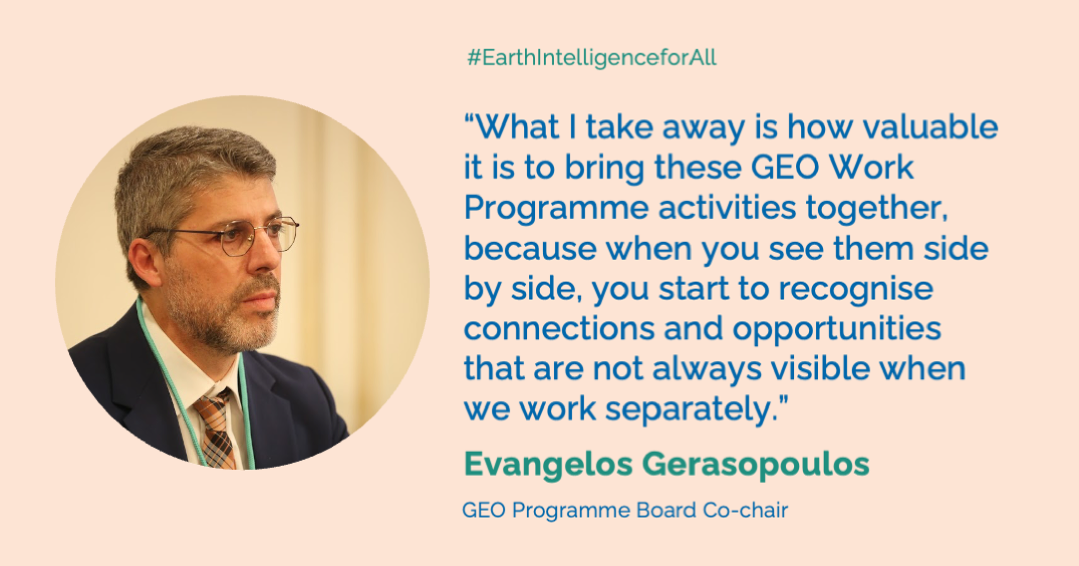
One thing I took away from the Second GEO Open House Webinar is how much potential we unlock simply by putting our activities side by side and really listening to each other.
Building on the first Open House Webinar, captured so well by Amos Kabo-Bah, we continued creating a space for exchange across the GEO Work Programme. This time, we focused on the disaster risk reduction (DRR)-climate-biodiversity nexus. It’s a complex theme, but what stood out to me was how naturally many of our activities are already contributing to it, often without explicitly framing it that way. And yet the potential for added value, through deeper collaboration across these synergies, is significant.
From individual efforts to a bigger picture
Thanks to the leadership of Gensuo Jia, co-chair of the GEO DRR & Adaptation Working Group, we designed this webinar as a cross-learning moment. Each of the five activities brought a different perspective, but all contribute to a shared goal and address closely related challenges.
Take GEO Land Degradation Neutrality, for example. Its focus on making land degradation data usable for decision-making relates closely to the broader integration challenge that Global Ecosystems and Environment Observation Analysis Research Cooperation is addressing, each contributing to a more complete view of landscape change.
Similarly, GEO-TREES adds an important layer through its work on forest structure and biomass, strengthening how we understand ecosystem resilience across multiple activities.
Then there is Digital Earth Africa, which brings a very practical dimension. As highlighted in the discussion, the real challenge is not just access to data but embedding it into operational workflows. That is exactly the kind of platform that can help scale and connect the work of others.
And importantly, the GEO Indigenous Alliance reminds us that these efforts must be grounded in local knowledge and practice. One comment that stayed with me was the idea of using Earth observation and accompanying technological advancements to support Indigenous management, not the other way around.
These are practical opportunities to increase the impact of GEO’s work.
What comes next
For me, the value of the Open House series comes from making the connections between different activities visible and then taking action to realise the synergies. The pieces are already there. The restructuring of the GEO Work Programme places emphasis on this cross-collaboration between activities and the promotion of our understanding of nexuses and how Earth observation can shed further light.
All the materials from the GEO Open House Webinar #2, including the presentations, are available on the GEO Knowledge Hub work. This blog is part of a series based on the presentations made during the webinar.