Bringing knowledge systems together for real-world resilience
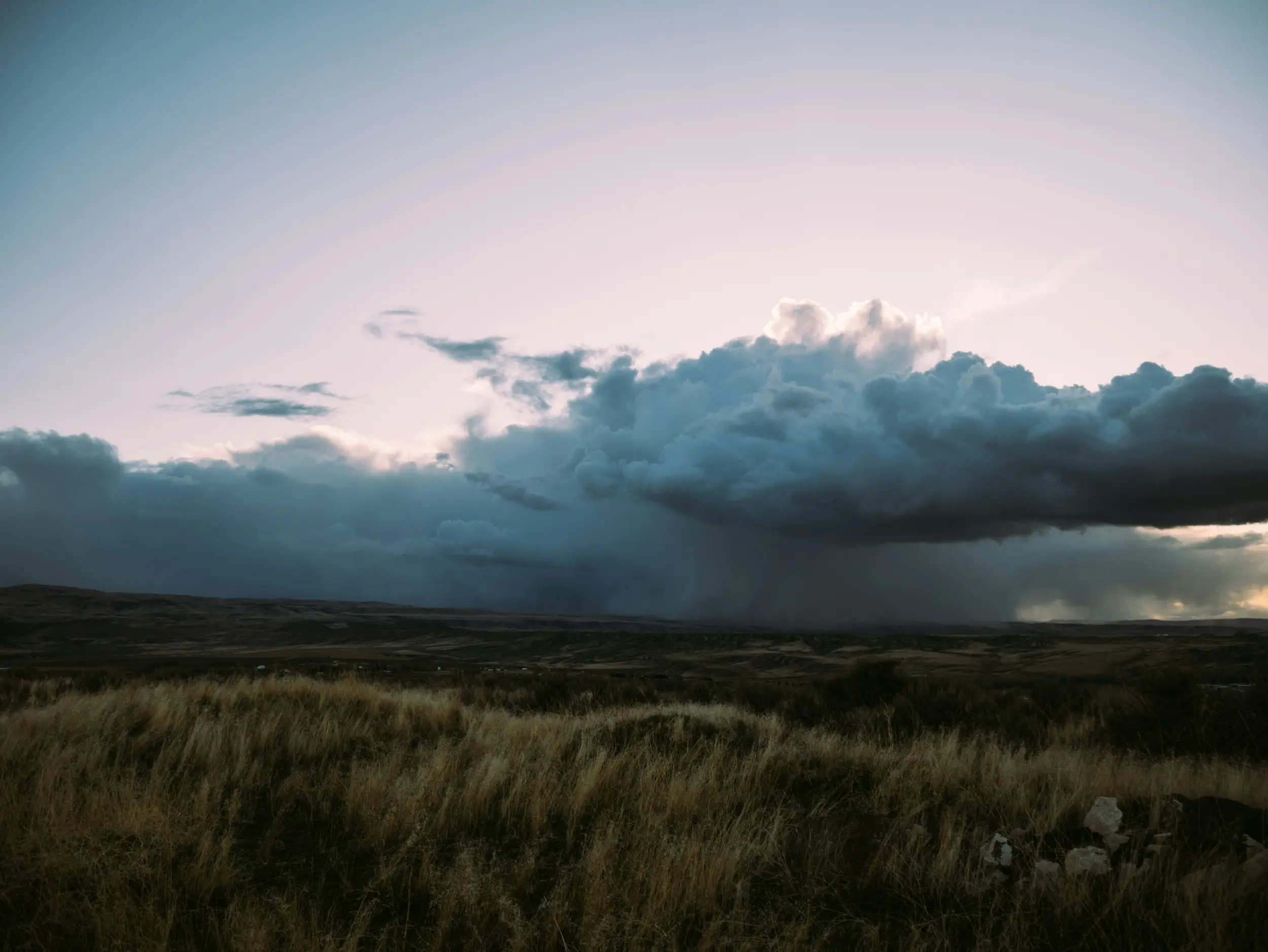
When we talk about climate change, biodiversity loss, and disaster risk, we often start with data. But where I come from, we start with relationships. With land, with water, with more-than-human life.
In my presentation at second GEO Open House Webinar, I shared the simple truth that these risks are not new for Indigenous communities. What is new is the scale and speed. Climate stress, ecosystem degradation, and water insecurity are intensifying across Indigenous territories, and they are deeply interconnected.
And these challenges cannot be understood through Earth observations alone.
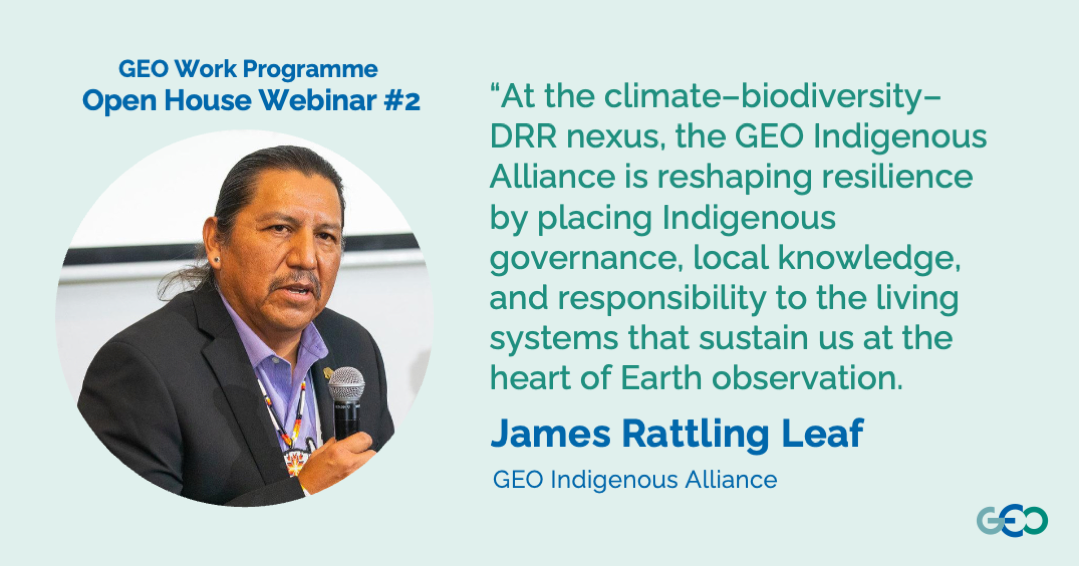
Bringing Earth observations and Indigenous knowledge together
Earth observations give us powerful tools to see patterns, track change and monitor risk. But this does not tell the whole story.
Indigenous knowledge is place-based, lived, and tested over generations. It brings context, meaning, and responsibility. When we bring these knowledge systems together, we get something stronger. Not just better data, but better decisions.
At the GEO Indigenous Alliance, we focus on making that connection real. This includes developing Indigenous-led governance frameworks, creating tools such as the Ethical Toolkit for biodiversity data and AI, and supporting community-based solutions that link sensors, Earth observations and local knowledge.
This is how we reshape how system work.
From awareness to action on the ground
The DRR-climate-biodiversity nexus is already lived in many communities. Drought affects food systems. Biodiversity loss affects water and livelihoods. These are not separate issues.
That is why our work focuses on governance, co-design and capacity building. We convene communities, practitioners and partners to work together in ways that are grounded in local realities.
Technologies such as Earth observations, sensors and AI are part of this work. But they are used in context, alongside Indigenous knowledge and decision-making.
Looking ahead
The priority now is to strengthen support for community-led implementation. This includes expanding tools, partnerships and long-term resources.
The goal is to build systems that are just, trusted and effective, by centring Indigenous governance and stewardship.
FACT SHEET: GEO Indigenous Alliance


All materials from the GEO Work Programme Open House Webinar #2, including the presentations, are available on the GEO Knowledge Hub. This blog is part of a series based on the presentations made during the webinar, including a summary by the Programme Board co-chair and DRRA-WG co-chair, as well as entries covering GEO-TREES, GEO-LDN, GEOARC and Digital Earth Africa.