Seeing beneath the surface: How one initiative is building a clearer picture of geohazards

Most people never see the enormous amount of Earth observation (EO) data collected over the world’s most active volcanic and tectonic regions, but this data is essential to detect changes in ground movements and map geological hazards. Through the Geohazard Supersites and Natural Laboratories (GSNL) initiative, we focus on interpreting subtle signals and making them useful for scientists and civil protection agencies.
GSNL is a long-term collaboration built around 12 high-risk regions. Much of what we do is only possible because of the strong and consistent support of the Committee on EO Satellites (CEOS) space agencies, who coordinate satellite acquisitions and share radar and optical data openly.
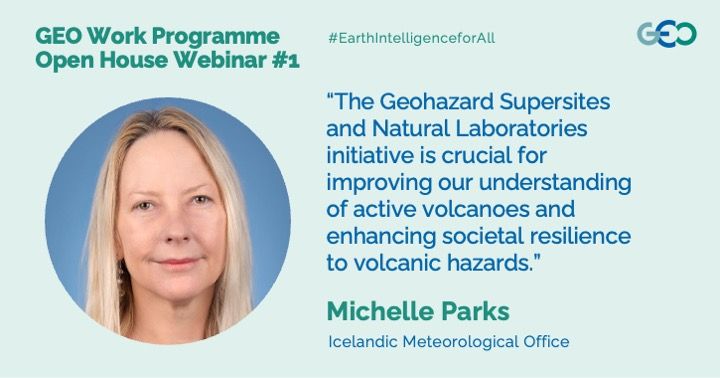
Turning complex signals into usable insight
One of the most exciting parts of GSNL is seeing how quickly our community can translate complex geophysical data into something decision-makers can use.
In Iceland, for example, continuous ground deformation has been monitored for years. By combining radar imagery from missions like Sentinel-1, COSMO-SkyMed, and ICEYE, we’ve been able to map magma pathways and track subtle shifts with high precision. These insights help authorities anticipate changes and understand evolving risk.
We see similar value in Hawaii, where partners map new ash deposits and lava flows shortly after they appear, and in the Virunga region of DR Congo, where GSNL teams support local scientists with equipment and shared interpretation.
Quiet periods give us time to refine methods, improve consistency, and prepare for the moments when early interpretation matters most.
A collaboration built on sharing
GSNL works because organisations around the world contribute data, expertise, and resources. When unrest began in the Aegean earlier this year, scientists from Iceland supported colleagues in Greece by helping interpret new radar data.
Our sustainability comes from these partnerships, which collectively contribute more than €7 million per year in in-kind resources. They allow us to keep improving our products, automate more processing and make information easier for civil protection agencies to use.
Looking ahead
GSNL’s mission is to understand geophysical change before a crisis begins and ensure that information reaches the people who need it. Our priorities include strengthening monitoring capacity in regions with fewer resources, expanding access to rapid radar imagery and improving the usability of our products for non-specialist audiences.
Fact Sheet: Geohazard Supersites and Natural Laboratories (GSNL)


- Access to multi-mission satellite data (Sentinel-1, COSMO-SkyMed, TerraSAR-X, SAOCOM, Pléiades)
- Deformation time series and geodetic modelling
- Mapping eruptive hazards (e.g. lava flows)
- Fault-slip and tectonic analyses


- High-resolution radar data
- Automated InSAR pipelines
- Cloud-based processing
- Rapid-response tasking from commercial SAR providers.

All the materials from the GEO Work Programme Open House Webinar #1, including the presentations, are available on the GEO Knowledge Hub work. This blog is part of a series based on the presentations made during the webinar, including a summary and entries covering SlopeRiskGPT, Space and Security, GSNL, NIGHT-LIGHT and GWIS.