Leading GeoAI for Climate Action Youth Training at AI for Good Global Summit
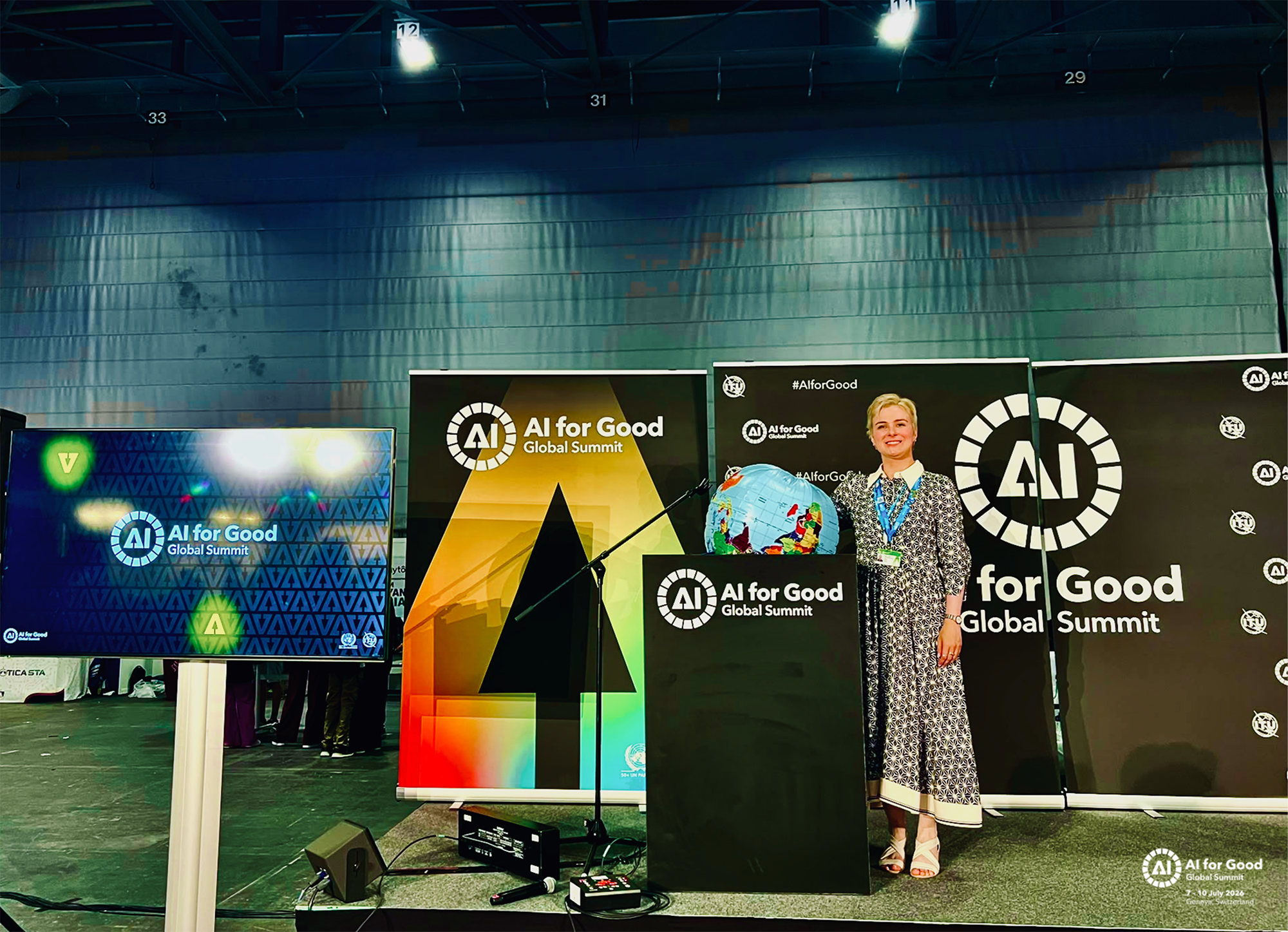
I was invited to speak at this year’s AI for Good Global Summit, held in Geneva from 7–10 July, where I led hands-on GeoAI (Geospatial Artificial Intelligence) training sessions for students in the Youth Zone in collaboration with Imperial College London and GEO. The sessions were featured as a highlight of the Summit in the AI for Good Insider newsletter and on the Summit website.
The experience reinforced the importance of introducing GeoAI education early and ensuring young people have access to free and open Earth observation data and tools to address critical global climate challenges in their own local communities.
The content and curriculum for the sessions drew on my research and experience teaching at Imperial College London and Massachusetts Institute of Technology (MIT), with the aim of making machine learning, deep learning, and Earth observations using real environmental data and free AI tools accessible to learners from different educational and linguistic backgrounds.
From satellite imagery to GeoAI applications
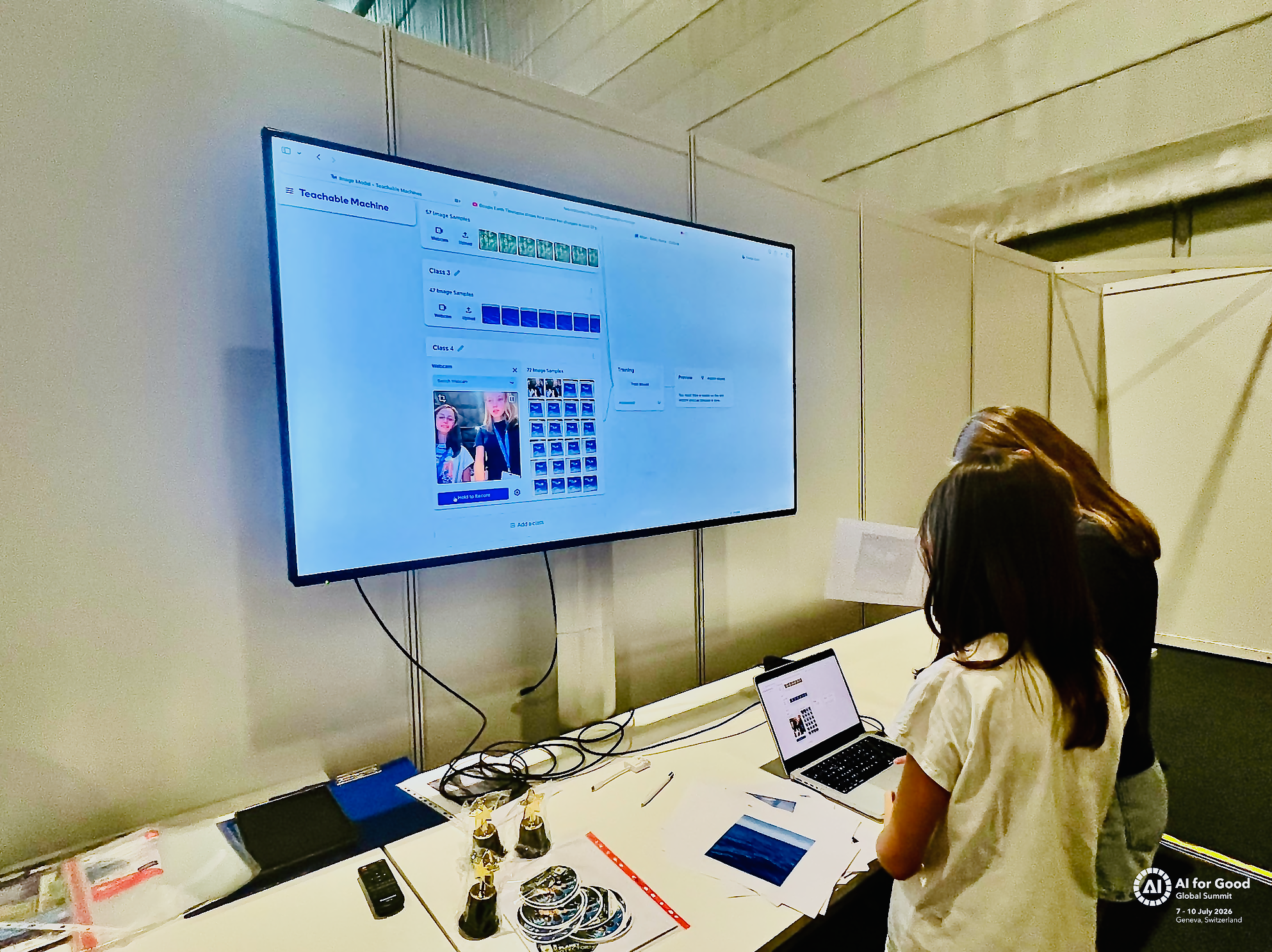
Participants became “Planet Protector Heroes”, working in groups to investigate environmental risks in the US Arctic, Bolivian Amazon and UAE desert using Google Earth data. They then used a Google tool to train and fine-tune models to recognise environmental features and changes in climate extremes in land and marine environments such as glacier retreat, deforestation and coastal erosion.
For many, this was their first experience of Earth observations and AI, but they progressed quickly from asking what satellite imagery could reveal to selecting images and data, testing models and considering the accuracy of results.
Seeing students build and demonstrate their own applications showed how the complexity of GeoAI does not have to be a barrier to early engagement.
Their reactions, together with feedback from parents, highlighted why free and accessible Earth observation data matters. It allows students to investigate places they may never visit, and environmental processes that may be difficult or expensive to observe directly.
Learning to train and question AI
My sessions also introduced concepts such as responsible and sustainable AI, data quality, model limitations, open data and open science, low-energy AI models and human-in-the-loop review.
Participants learned that an AI-generated answer is not automatically correct even if it is often faster. Data may be incomplete or biased, models can make mistakes, and environmental information often requires human interpretation and local knowledge.
AI should therefore support, rather than replace, the judgement of communities, scientists and policymakers.
Connecting young people to GEO
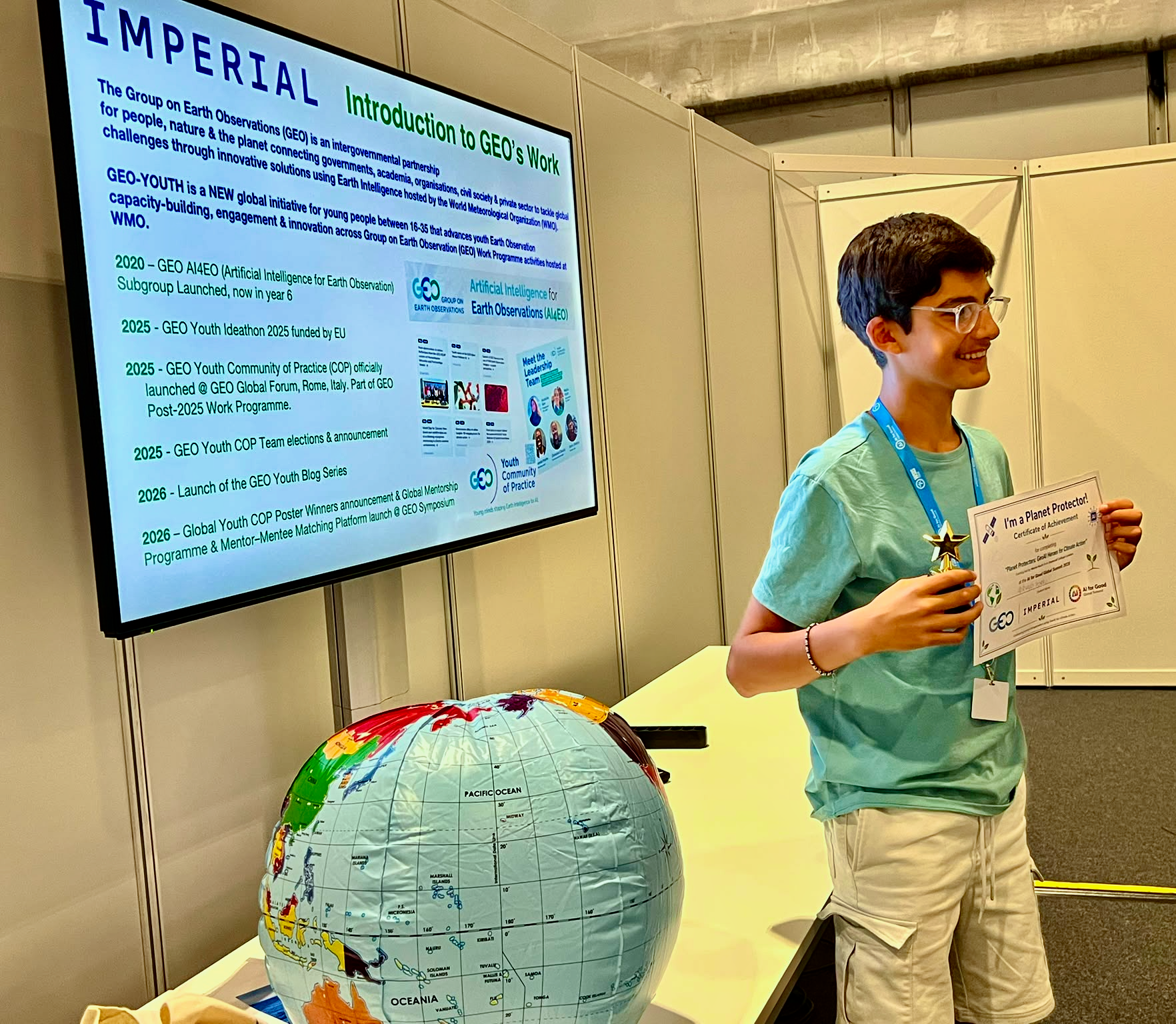
I introduced participants to the opportunities and guidance they can receive via the GEO Youth COP and shared our recent GEO Symposium 2026 Community Event on ‘Investing in Future Earth Intelligence Leaders’, which I had the privilege of moderating as GEO Youth Leadership Team Programme Co-Lead. Participants also learnt about the GeoAI work of the GEO AI4EO (Artificial Intelligence for Earth Observation) Enabler which is focused on developing global AI-driven EO solutions that support GEO’s Post-2025 Strategy and climate data ecosystem globally.
From Summit to future action
I hope to return to the Summit next year, with adapted activities for different ages and educational backgrounds and additional climate challenge cases linked to wider GEO Work Programme activities. Feedback from students and parents will help shape future sessions.
This Summit experience showed me that young people are ready to engage with GeoAI even at school level. The priority now is to give them the data, tools, learning opportunities and community support that can turn this curiosity and potential into long-term scientific and policy action.
This blog is part of the GEO Youth Blog Series, an initiative dedicated to amplifying youth voices, perspectives and contributions across the Earth observation community. This blog is also part of a new series based on the AI4Good Global Summit 2026, including the summary, SIDS presentation and heat pilot presentation at EW4ll session. Read Marta’s previous GEO youth blog on GeoAI.