More than a Technical Conversation: UNIGE volunteers' reflections on the GEO Symposium Technology Town Hall
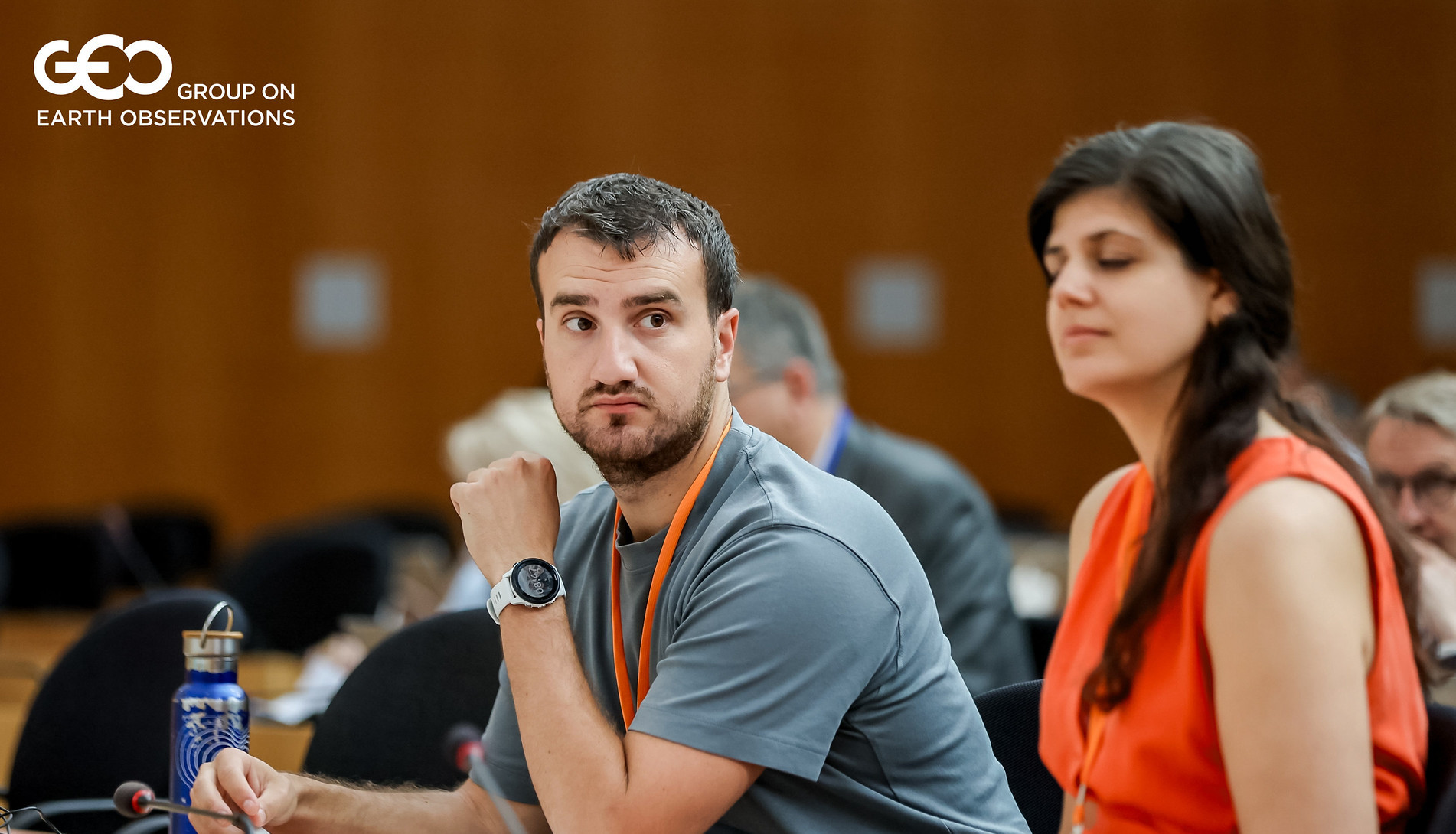
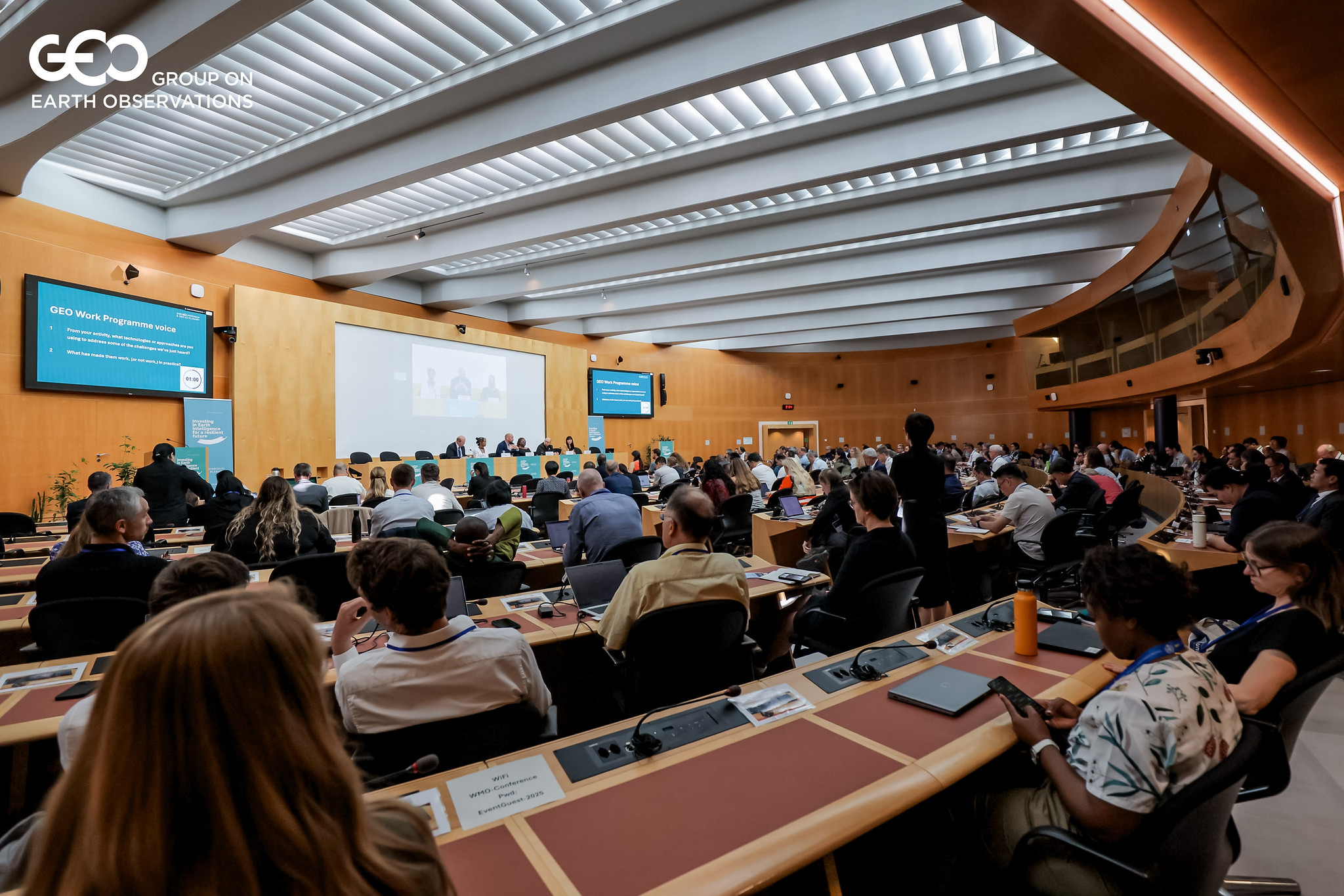
We had the chance to support the 2026 GEO Symposium Town Hall, "Harnessing Innovative Technologies for Earth Intelligence Solutions," on 27 May, and we wanted to share how it felt from our side, as two young professionals sitting in the room. Going in, we did not really know what to expect. We wondered if it would be a lot of high-level talk that did not really touch our own work. Instead, the discussion stayed grounded and practical from start to finish.
The session looked at how GEO can accelerate the responsible, scalable, and sustainable adoption of new technologies. Although the discussion was high-level, what resonated most with us was how grounded it remained in practical realities. The technologies panelists talked about were not far-off ideas but tools already in use, from AI helping to spot illegal waste sites to crop yield models that let a country plan ahead through a drought. It was a good reminder of how much Earth observations already shape real decisions in people's lives.
Three perspectives that stayed with us
We were especially glad to hear Letwin Pondo on the panel. As a young professional herself, she described using very high-resolution imagery to map flood-prone areas in Tanzania, and what came through was not the technology but the people behind it: being able to clearly see where communities are, and to act on that. Hearing this from someone our own age meant a lot.
A few honest points stuck with us too. Sven Gilliams put it simply: technology on its own does not scale. What carries a project is trust, local ownership, and partnerships that last. Each region has its own way of seeing things, he noted, especially in agriculture, and a solution applied by the book in one place will not work in another. We also liked the reminder that AI is not a magic button. Questions of data quality and fairness still matter, particularly when so much training data comes from only a few parts of the world. Early in our own careers, we found ourselves wondering how much of our future work will be about checking and validating what AI produces. Talking about it afterward with colleagues, we discussed that a model is only as good as the data behind it. Someone needs to know a place well enough to recognize when something is wrong. That kind of judgment is not something you learn from a tool. It comes from spending time with the data, understanding the region, and engaging with the people the work is meant to serve, and it is exactly the skill we feel we need to build now, early on, rather than later. Increasingly, the ability to critically evaluate outputs using local knowledge and domain expertise will be part of the job for our generation, not a side task.
Grace Saunders-Hogberg's talk on drones brought this back to communities. Making tools like these more accessible builds real capacity on the ground, and when young people are given the means to collect and use high resolution data, communities are better placed to understand and lead their own development.
The next generation of Earth Intelligence
If there is one thing we took away, it is that involving young people is not a nice extra. We are already using these tools, building with them, and asking harder questions. Community engagement, with accessible and trustworthy data and a genuine sense of ownership, is what will make this work last. The topic of AI ran through the whole conference, and it is clearly central to where our field is going. But what stayed with us is that the work is not only about checking what AI produces. It is also about the data itself, and about really understanding the places and problems behind it. Our work is shifting fast, and it is easy to get caught up in the tools. For our part, what we want to carry forward is not forgetting these other aspects, such as staying close to the people and places behind the data and keeping the harder questions in mind as we go. We left encouraged and were glad to be part of it.
-----
This blog is part of the GEO Youth Blog Series, a new initiative dedicated to amplifying youth voices, perspectives and contributions across the Earth observation community.