Building bridges in mountain research: insights from the GEO Symposium and beyond
The future of mountain research depends on more than better data. It depends on stronger connections between communities, disciplines, and generations. During a week of discussion at the GEO Symposium and the GEO Mountains General Meeting in Geneva, I was reminded how collaboration, open knowledge, and youth leadership are helping build those connections.
Strengthening collaboration across GEO communities at the Symposium
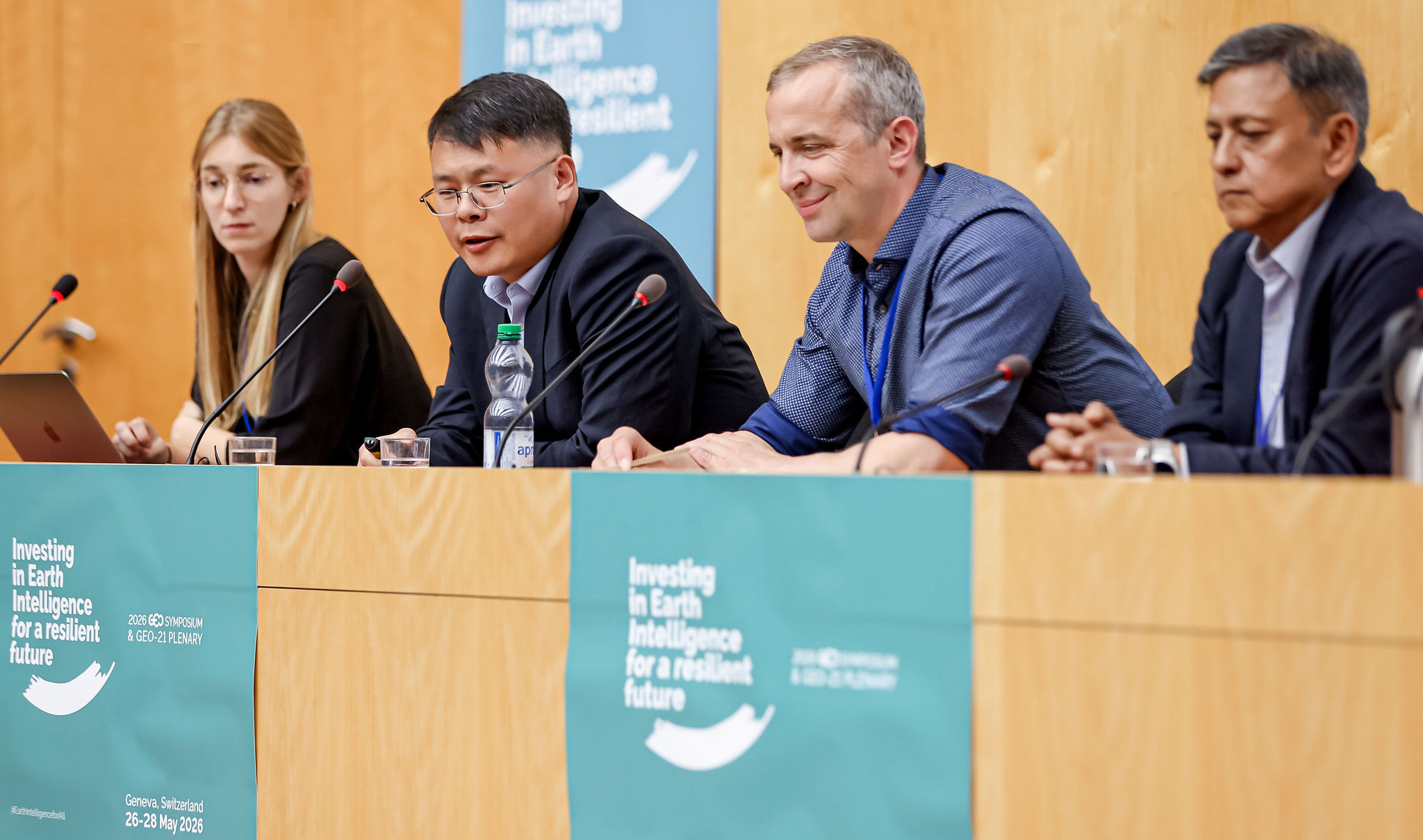
A key highlight of the week was the community event by GEO Mountains and the World Overview of Conservation Approaches and Technologies (WOCAT) with GEO-LDN, CBAS and ICIMOD.
The session tackled a critical question “how do we effectively monitor land degradation and foster restoration in mountains?” While mountain environments present well-known difficulties for satellite monitoring (steep terrain, cloud cover, fragmented land-use systems), it was interesting that speakers emphasised many of the biggest challenges relate not only to data availability, but also to interpretation. How degradation itself is defined and understood varies significantly across different environmental and social contexts. I was particularly excited about growing interest in strengthening collaboration between the mountain research and GEO-LDN communities to better address the specific monitoring and governance challenges facing mountain regions. (Read more about the session here).
Outside our session, what I found particularly valuable was the opportunity to learn about platforms and tools, through the Open Data and Open Knowledge (ODOK) sessions, that could enhance our work. Understanding the variety of resources and methodologies being developed across the GEO community helps identify synergies and strengthens our capacity to address data gaps in mountain regions. These exchanges are essential for advancing both the technical and collaborative aspects of our research.
Learning at the GEO Mountains General Meeting
The GEO Mountains General Meeting was held right after the GEO Symposium and was co-hosted by GEO and the World Meteorological Organisation (WMO), reinforcing collaboration and encouraging members to participate in both events. These biannual gatherings serve as an important function in our network: they provide a forum for members to present their work, share methodological advances, and identify opportunities for collaboration. An inspiring aspect for me was the number of high-quality young professional presenting their work, reflected the inspiring youth engagement happening across multiple initiatives in our community.
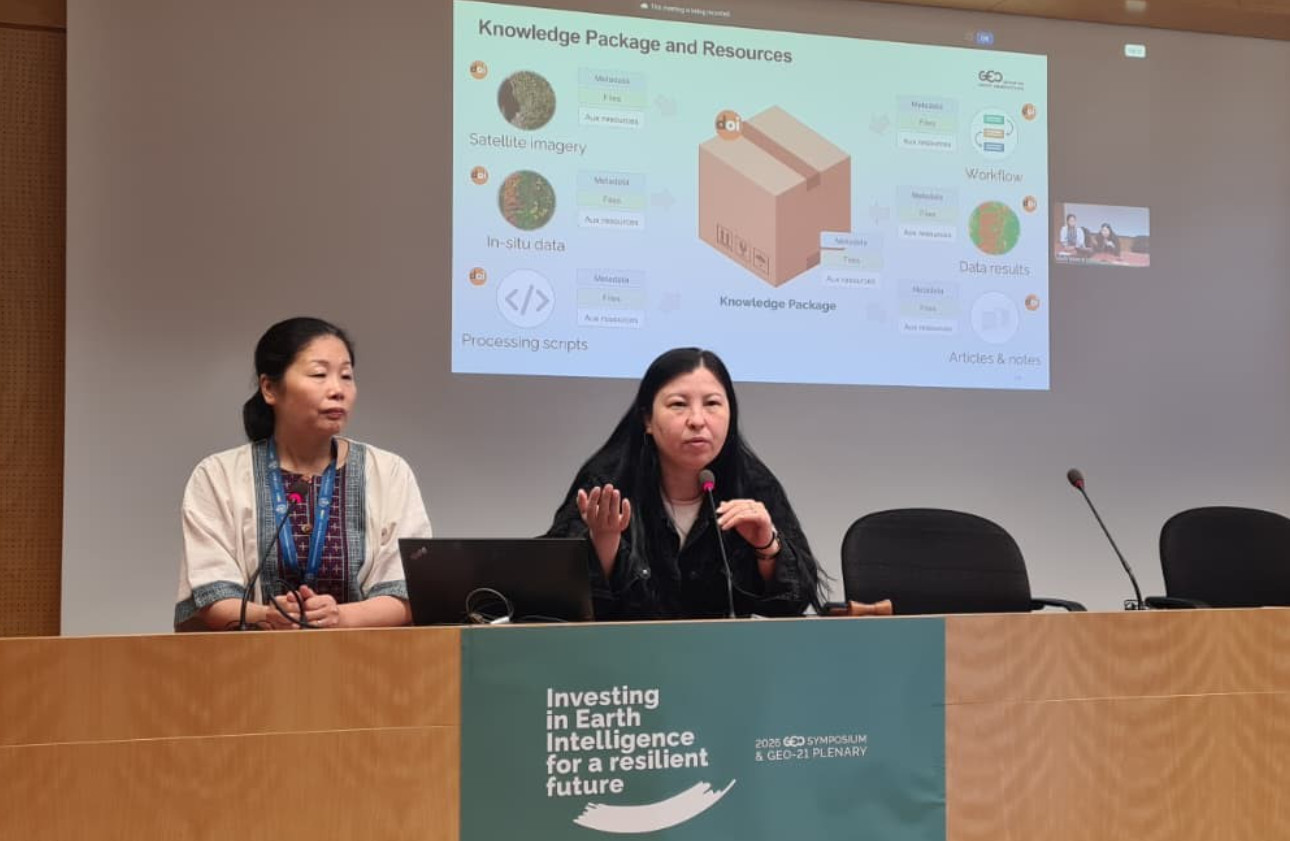
From the GEO Secretariat, Rui Kotani and Kalamkas Yessimkhanova demonstrated how the GEO Knowledge Hub can serve as a central repository for Earth observation applications, methods, and datasets. They also presented the GEO Youth Community of Practice (GEO-YOUTH), which offers mentorship, ideathons, and practical webinars for early-career professionals. From WMO, Narelle van der Wel emphasized the need to move from fragmented data portals to interoperable systems built on agreed standards, highlighting how the Global Cryosphere Watch (GCW) is advancing guidance on instrumentation, variables, and data sharing to integrate key datasets into WMO systems
These presentations underscored an important principle: effective science-to-policy translation requires both technical advances in monitoring and strategic efforts to make data accessible and actionable for decision-makers. (Read more about the meeting here.)
Looking ahead: the GEO Mountains Youth Ideathon
During the General Meeting, I also shared updates on the upcoming GEO Mountains Youth Ideathon taking place between 2 and 9 July and bringing together twelve young researchers and practitioners from mountain regions worldwide to co-develop solutions for disaster risk reduction in mountain environments.
I'm particularly interested in the collaborative methodology we're implementing – it's made by youth, with youth, for youth. The participants bring expertise from diverse disciplines and geographic contexts, which should facilitate rich knowledge exchange and cross-regional learning. As the first event of this type organised by GEO Mountains, it also represents a valuable opportunity to evaluate the effectiveness of youth-led co-creation processes in addressing complex mountain challenges and its potential creativity. The event builds on lessons learned from the GEO Ideathon 2025, where I participated, and discussions throughout the GEO Symposium, and will be integrated with the Regional Mountain Conference to maximise knowledge sharing and impact, with experts in the field.
This week reinforced me the value of collaboration, open data and knowledge, and youth engagement in shaping the future of mountain research. As a young professional, I'm encouraged to see these foundations being built, and to be part of building them.
-----
This blog is part of the GEO Youth Blog Series, a new initiative dedicated to amplifying youth voices, perspectives and contributions across the Earth observation community.