AmericasMember since 16 Feb 2005
Canada

Canada

Engagement history with GEO

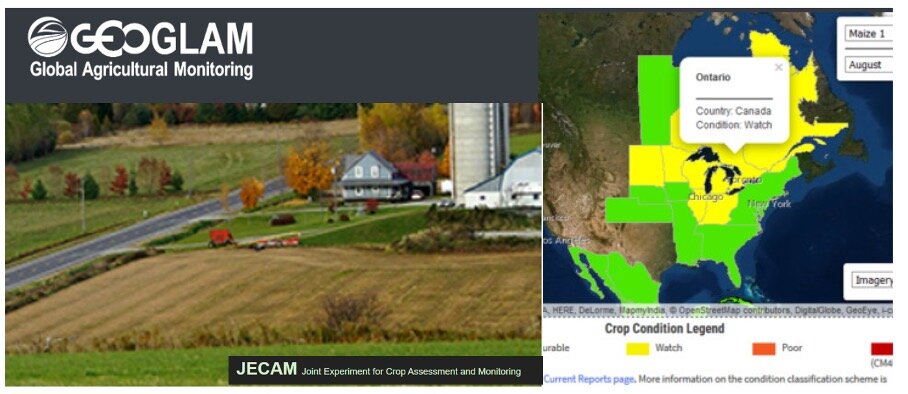
Canada is a founding member of the Group on Earth Observations (GEO) and has participated in GEO’s community since the organization was created in 2005. Throughout the years, Canada has contributed to GEO Plenaries, Ministerial meetings, and the GEO Programme Board as well as the GEO Trust Fund. Canada has also financially supported GEO Work Programme activities, such as Group on Earth Observations Biodiversity Observation Network (GEO BON), GEO Global Agricultural Monitoring (GEOGLAM), and the AmeriGEO Week 2025.

The lead federal department for GEO, Environment and Climate Change Canada (ECCC), serves as the GEO Principal for Canada, hosts the Canadian GEO Secretariat, and is supported by the Canadian Space Agency who serves as the alternate GEO principal.

The Canadian GEO Secretariat facilitates Canada’s engagement in the GEO community through a broad national network of academia, industry, and multiple government departments. This approach advances common goals between national stakeholders and the GEO community.

Participation in GEO work programme activities

Canada contributes leadership and specialized expertise to advancing the global GEO agenda. McGill University, as GEO Biodiversity Observation Network (GEO BON) co-chair and host of the Secretariat from 2020 to 2026 in Montréal, plays a key role in the GEO BON, supporting international collaboration and innovation in biodiversity observation and monitoring contributing at national, regional, and global scales.

Agriculture and Agri-Food Canada plays a national leadership role on the GEOGLAM Executive Committee and serves as co-chair of the Joint Experiment for Crop Assessment and Monitoring.

ECCC co-chairs the Health Community of Practice to help advance EO technologies that strengthen regional and global capacity for managing and monitoring health-related risks with the Public Health Agency of Canada.

In addition to the areas highlighted above, Canada contributes to the following initiatives:

  • GEO Mountain
  • Global Observation System for Mercury (GOS4M)
  • Health Community of Practice (HEALTH COP)
  • The Global Wildfire Information System (GWIS)
  • Earth Observations for Disaster Risk Management (EO4DRM)
  • SLOPE-RISK-GPT

Role of private sector in GEO

Canada actively promotes GEO’s engagement with industry, recognizing the value private sector partnerships can bring to GEO solutions and strategy implementation. Canadian industry is engaged in the GEO community, with several Canadian companies holding associate membership to GEO.

Participation in the regional caucus – AmeriGEO

Canada participates in the AmeriGEO community and regularly attends the Americas Caucus and the AmeriGEO Coordination Working Group. In recent years, Canada has supported the community by sharing lessons learned and best practices for developing a national satellite Earth Observation (EO) strategy and establishing a national GEO Secretariat.

Canada’s leadership was also evidenced during the 2024 and 2025 AmeriGEO weeks, which supported the alignment of the Americas’ activities with GEO’s post-2025 strategy. Canada further represented the Americas community during regional sessions at the 2025 GEO Global Forum.

Earth observation capabilities and national policy priorities

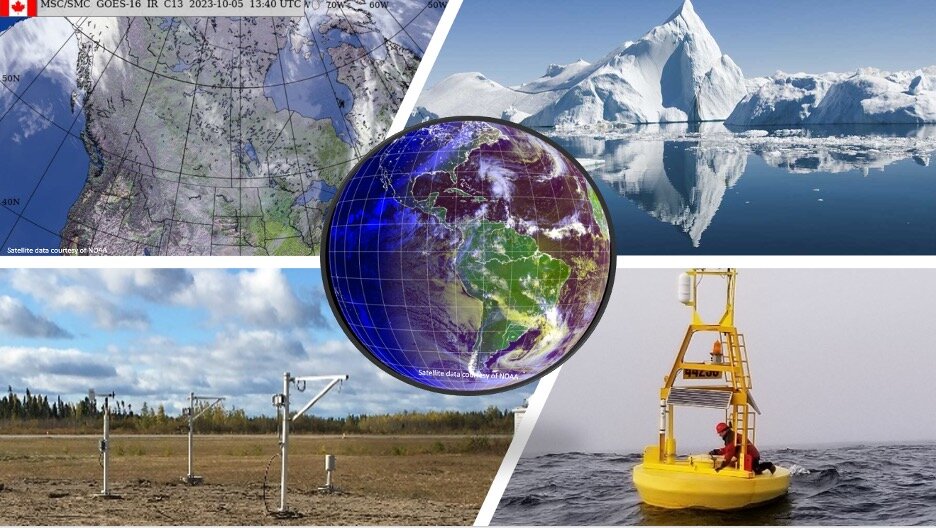
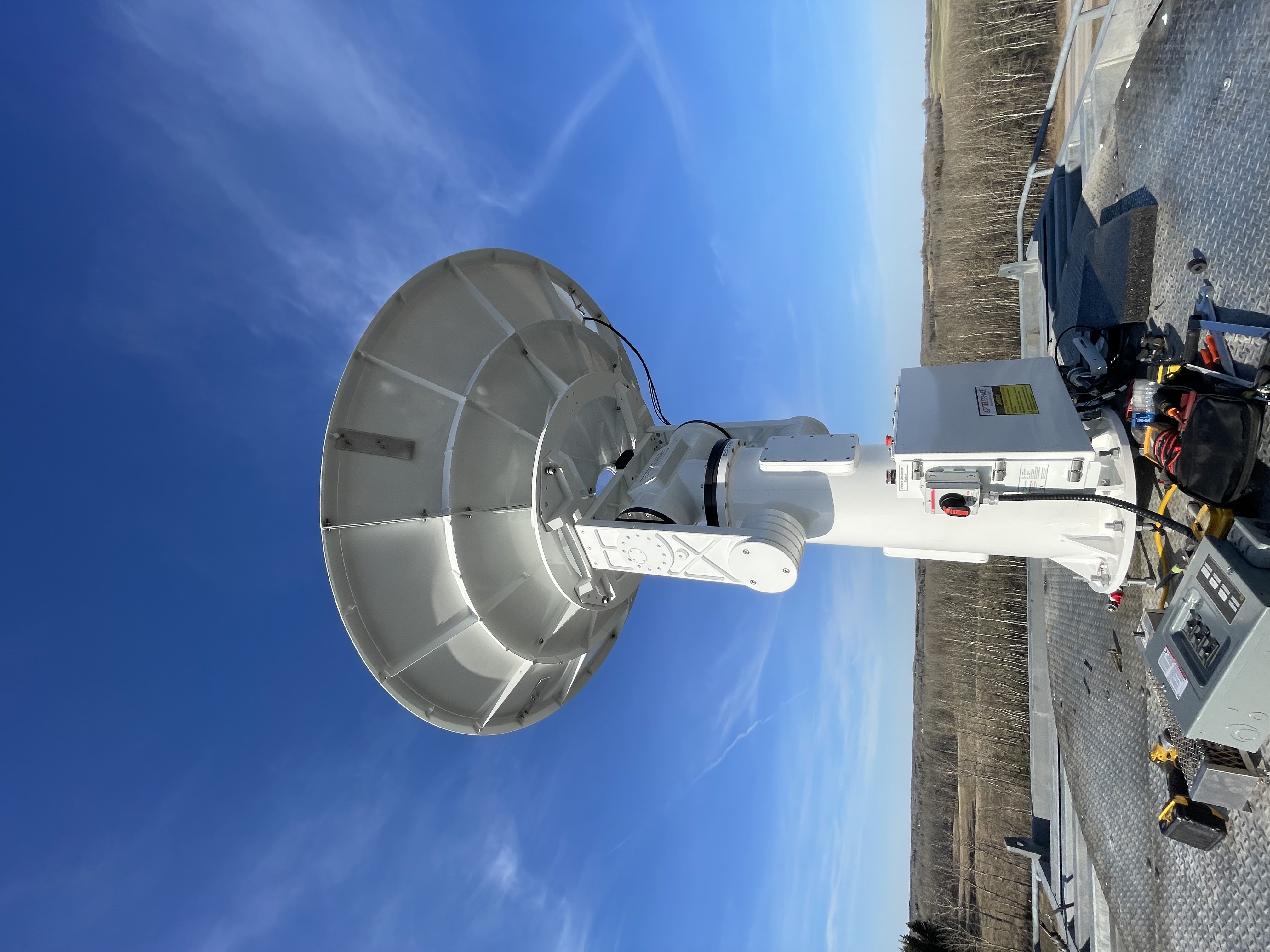
Canada has comprehensive EO capabilities that span the entire value chain. This includes satellite missions, ground receiving stations, in-situ monitoring networks, data infrastructure and analytics. These assets support a wide range of national programs and services as well as contribute to evidence-based national policy and decision-making.

In 2022, Canada launched a satellite EO strategy to guide Canada’s actions and investments over the next 15 years. The strategy vision comprises of a whole-of-society engagement, innovation and end-to-end integration.

It addresses four main objectives:

  • Enabling open data access to maximize science and economic development
  • Leveraging satellite EO to address climate change and key issues
  • Strengthening the delivery of critical services
  • Inspiring capacity development for the next generation

Together, these efforts position Canada to harness EO capabilities to drive innovation, inform policy, and address pressing environmental and societal challenges.

GEO Principals

Neil undefined
Neil Carson
GEO Principal
Guennadi undefined
Guennadi Kroupnik
GEO Principal Alternate

Focal Points

Statements

2026 GEO Symposium / GEO-21 Plenary
26-28 May 26Geneva, Switzerland
Statement
“Canada continues to invest in Earth Observation, from in-situ measurements to satellite systems, in order to better monitor our changing environment, and recognizes the importance of knowledge sharing and international cooperation in achieving common goals for the global benefit of our planet.”
Mr. Neil Carson undefined
Mr. Neil Carson National Atmospheric Monitoring Directorate, Meteorological Service of Canada, Environment and Climate Change Canada
Quote Illustration
Over the past six years, GEO BON supported the application of biodiversity monitoring, from national to global scales. GEO BON has contributed to shaping the Kunming-Montréal Global Biodiversity Framework and to building the tools, indicators, and partnerships needed to deliver it. Canada is well positioned to continue playing an important leadership role in GEO BON and supporting countries in turning global commitments into measurable outcomes.
Dr. Andrew Gonzalez undefined
Dr. Andrew Gonzalez Professor McGill University, Liber Ero Chair in Biodiversity Conservation, co-chair of GEO BON, and Quebec Centre for Biodiversity Science Director
Quote Illustration
GEO Global Forum 2025
05-09 May 25Rome, Italy
Statement
Canada continues to benefit from the exchange of knowledge and expertise through GEO, AmeriGEO, and our national GEO community. More than ever, international collaboration and continued access to open Earth observations is fundamental to addressing key global challenges, including climate change, biodiversity loss, and pollution. The Post-2025 Strategy is an important step and a clear demonstration of our commitment to innovation, knowledge-sharing, and international cooperation.
David Harper
David HarperGEO Principal for Canada, and Director General, Satellite Earth Observations, Environment and Climate Change Canada
GEO BON, is a network of over 3,600 members across 152 countries worldwide, advancing research and collaboration to support a Global Biodiversity Observing System. GEO BON’s global conference "Living Data/Datos Vivos" in Bogota Oct 21-24, 2025, will convene its community to exchange knowledge and demonstrate progress in the development of biodiversity observation networks, monitoring practices and open data and platforms, such as BON in a Box. These advancements facilitate the global access of biodiversity data and the development of indicators for biodiversity conservation. In addition, GEO BON continues to provide monitoring science in support of the implementation of Kunming-Montreal Global Biodiversity Framework of the UN Convention on Biological Diversity (CBD decision 15/5). This year GEO BON will participate in UN CBD regional and sub-regional dialogues offering guidance and training on the means to implement indicators within national monitoring frameworks.
Andrew Gonzalez
Andrew GonzalezProfessor McGill University, Liber Ero Chair in Biodiversity Conservation, co-chair of GEO BON, and Quebec Centre for Biodiversity Science Director
Quote Illustration
GEO Week 2023
06-10 Nov 23Cape Town, South Africa
Statement
Canada continues to strengthen its national GEO community and its contributions to address key global challenges, such as climate change, biodiversity loss, and pollution. As highlighted in Canada’s Satellite Earth Observation Strategy, we will continue to strive to enhance access to open data for all and foster domestic and international partnerships that recognize the importance of engaging and building capacity among Indigenous communities, women and gender minorities, and other traditionally marginalized peoples, as well as our youth, to ensure the use of EO to benefit our planet is inclusive, sustainable over time, and leveraged to its full potential.
David Harper undefined
David Harper GEO Principal for Canada, and Director General, Meteorological Service of Canada, Environment and Climate Change Canada
Quote Illustration
It is necessarily through strong and broad partnerships that we can feed the ever-growing need for satellite data and inform global and local action on Earth. National and international multidisciplinary collaboration is the key to achieving success. The Canadian Space Agency is a key player in the implementation of the Canadian Satellite Earth Observation Strategy by proceeding with missions about Atmospheric sciences and wildfire management. On the international front, the Canadian Space Agency is looking forward to chairing the Committee on Earth Observation Satellites (CEOS) in 2024 and extend the use of EO into new areas and continue the CEOS-GEO collaboration.
Éric Laliberté undefined
Éric Laliberté CEOS Principal for Canada and Associate Director General, Canadian Space Agency
Quote Illustration
GEO BON, is a network of over 2,800 members across 141 countries worldwide, advancing research and collaboration to support a Global Biodiversity Observation System. GEO BON’s global conference in Montreal convened its community Oct 10-13 2023 to exchange knowledge and demonstrate progress in the development of biodiversity observation networks, and open data portals and tools. These advancements facilitate the access of biodiversity data and the development of indicators for biodiversity conservation. GEO BON continues to provide monitoring science in support of the implementation of Kunming-Montreal global biodiversity framework of the UN Convention on Biological Diversity. (COPCBD decision 15/5)
Andrew Gonzalez undefined
Andrew Gonzalez Professor McGill University, Liber Ero Chair in Biodiversity Conservation, co-chair of GEO BON, and Quebec Centre for Biodiversity Science Director
Quote Illustration
Agriculture and Agri-Food Canada (AAFC) contributes leadership to the GEO Global Agricultural Monitoring initiative (GEOGLAM) and the GEOGLAM Joint Experiment for Crop Assessment and Monitoring (JECAM) network through its work in EO-based mapping and monitoring of agricultural landscapes, particularly with respect to the use of synthetic aperture radar (SAR). AAFC’s international science and technology collaborations span the entire EO research-development-deployment continuum. This work has allowed AAFC to improve its operational EO-based agricultural monitoring systems and, in doing so, deliver valuable public-good data to Canadians. AAFC also continues to be an active member in the GEO Programme Board where it shares its experience and expertise and pursues potential synergies for further collaborative work.
Dr. Andrew M. Davidson undefined
Dr. Andrew M. Davidson Associate Director - Research, Development and Technology, Agroclimate, Geomatics, Earth Observation & Agroecosystem Resilience, Science and Technology Branch, Agriculture and Agri-Food Canada
Quote Illustration
GEO Week 2022
31 Oct 22 - 04 Nov 22Accra, Ghana
Statement
Canada is proud to have released “Resourceful, Resilient, Ready:  Canada’s Strategy for Satellite Earth Observation” in January 2022.  The strategy outlines an approach that will guide Canada’s actions and investments related to satellite Earth observation data, technology, and international partnerships, as well as advance and promote common goals.  This includes advancing new satellite missions and analytical environments to generate solutions for climate change mitigation and adaptation, particularly in Canada’s Arctic.
David Harper undefined
David Harper GEO Principal for Canada, and Director General, Meteorological Service of Canada, Environment and Climate Change Canada
Quote Illustration
GEO activities and the EO community have become central in helping Canada create the innovative Census of Environment by providing a fertile ground for the exchange of ideas and solutions required to make the initiative a success.
François Soulard, Ph.D. undefined
François Soulard, Ph.D. Research Manager Census of Environment Statistics Canada
Quote Illustration
GEO BON, a network of over 2,300 members across 134 countries worldwide, provides open data and knowledge to support research and conservation action for biodiversity. GEO BON offers a blueprint for a Global Biodiversity Observation System. To do this we are building data portals and online tools to allow a wide range of users to collect and analyze biodiversity data (from Earth observations to in-situ measurements) and produce indicators designed to assess progress and inform decision making for biodiversity conservation. In addition, GEO BON is providing scientific expertise for the post-2020 global biodiversity framework of the UN Convention on Biological Diversity, to be negotiated at COP15 in Montreal (December 2022).
Andrew Gonzalez undefined
Andrew Gonzalez Professor McGill University, co-chair of GEO BON, and Quebec Centre for Biodiversity Science Director
Quote Illustration