From field to fork to watershed: Earth Intelligence for One Health food safety
"One Health" is a collaborative, multi-sector approach to achieving better public health outcomes. Every year on 3 November, One Health Day is used to raise awareness of the approach and champion the work of those at the forefront of protecting the health of people, animals and the environment. Throughout November, the GEO Health Community of Practice will publish blog posts to explore the links between environmental change, animal health and human wellbeing, and the role Earth observations play in understanding them.
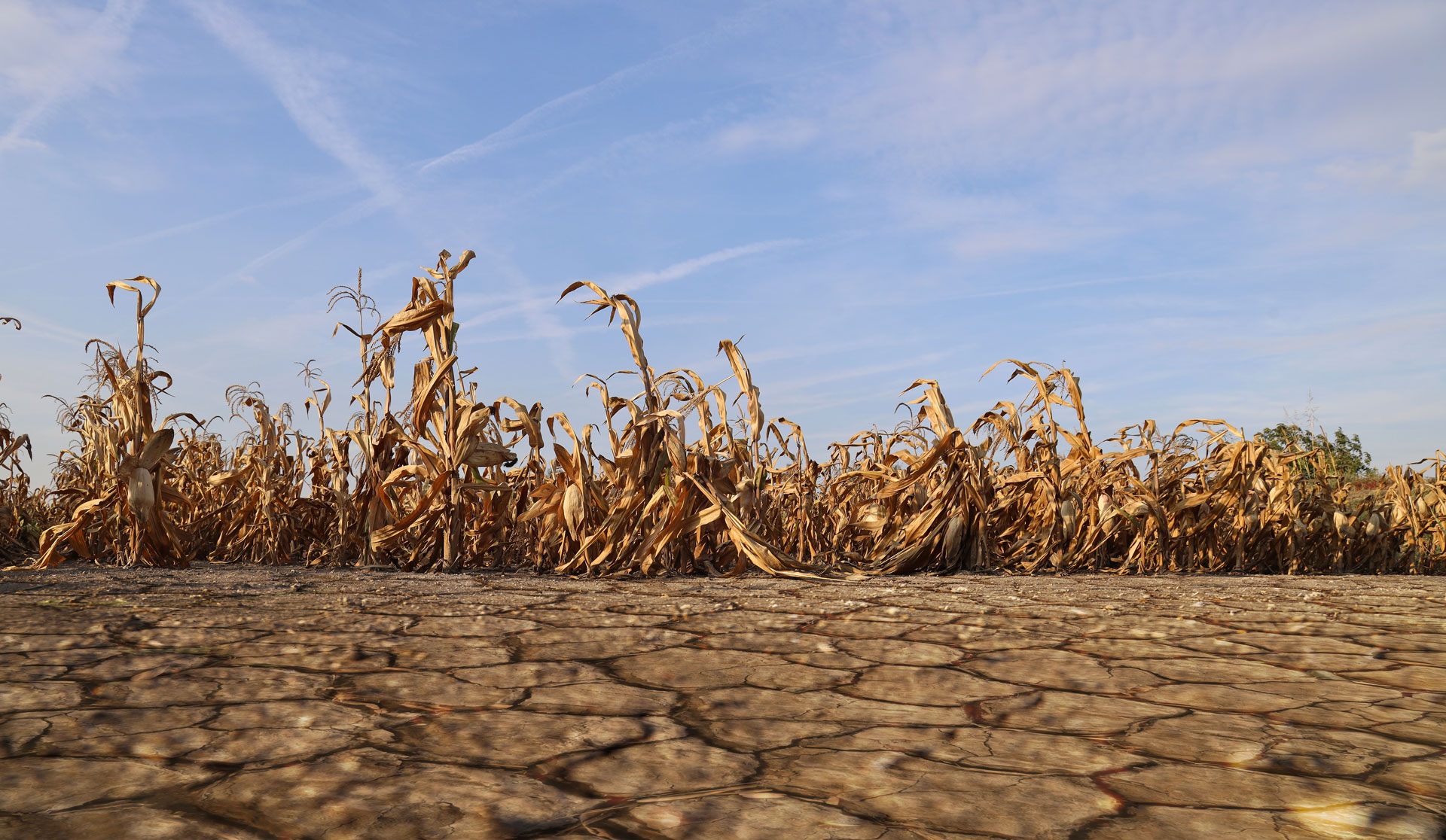
Food security and food safety are One Health problems by design. Water used to irrigate crops can pick up waste from farms upstream. Warm coastal water is good for harvesting shellfish, but it also helps harmful bacteria and toxic algae thrive. And when drought stresses maize crops, it can let in a mold that produces dangerous toxins, which then find their way into animal feed.
The interconnectedness of these issues means that food security cannot be separated from the need for clean water and energy. Irrigation draws on the same rivers and aquifers that supply cities and cool power plants, while pumping, fertilizer production and cold chains all depend on energy.
A decision in one sector shifts risk in the others. The central challenge is planning across this Food-Water-Energy nexus while two uncertainties grow at once: a changing climate that alters rainfall, heat and water availability, and rising food demand driven by population growth and changing diets.
The role of Earth observations
Earth observations provide routine views of these drivers. Soil moisture, rainfall, evapotranspiration and land surface temperature track crop stress and water use. Ocean color and sea surface water temperature support algal bloom detection. Land use maps reveal livestock density and runoff pathways.
GeoAI turns these layers into decisions. Models can build climate and demand uncertainty into yield and water forecasts. Optimization methods show where, when and what to plant, irrigate or leave fallow, so that production holds steady across a range of possible futures.
But gaps remain. Satellites can see turbidity and chlorophyll but not E. coli, so irrigation water quality still depends on sparse sampling. Foodborne illness reporting can be delayed and aggregated, weakening the link between hazards and health outcomes. Models trained in one region often fail to transfer, making local validation and community co-design essential.
The GEO Health Community of Practice's Food Security and Safety Work Group addresses these gaps through monthly meetings with experts from academia, industry and non-governmental organizations.
Every meal depends on healthy soils, water, energy, animals and people. We invite researchers, practitioners and policymakers to present, contribute, or join the conversation.
Learn more about the GEO Health CoP and Food Security and Safety Work Group.